50 wins. 0 losses. No one cracked the code.
When asked how to beat Floyd Mayweather's shoulder roll defense, one coach admitted: "I don't know... it's not a simple question."
For two decades, the greatest fighters in the world tried to solve the puzzle that is Floyd Mayweather. They all failed. His style has been called boring by casuals — but to students of the game, it's a masterclass in defensive genius and calculated offense.
Today, we're giving you the blueprint.
The Mayweather Defense
While many talk about Floyd's 50-0 record, here's the truth: you can't win fights with defense alone. But Floyd's defensive foundation gave him something invaluable — the ability to take zero damage while waiting for the perfect moment to strike.
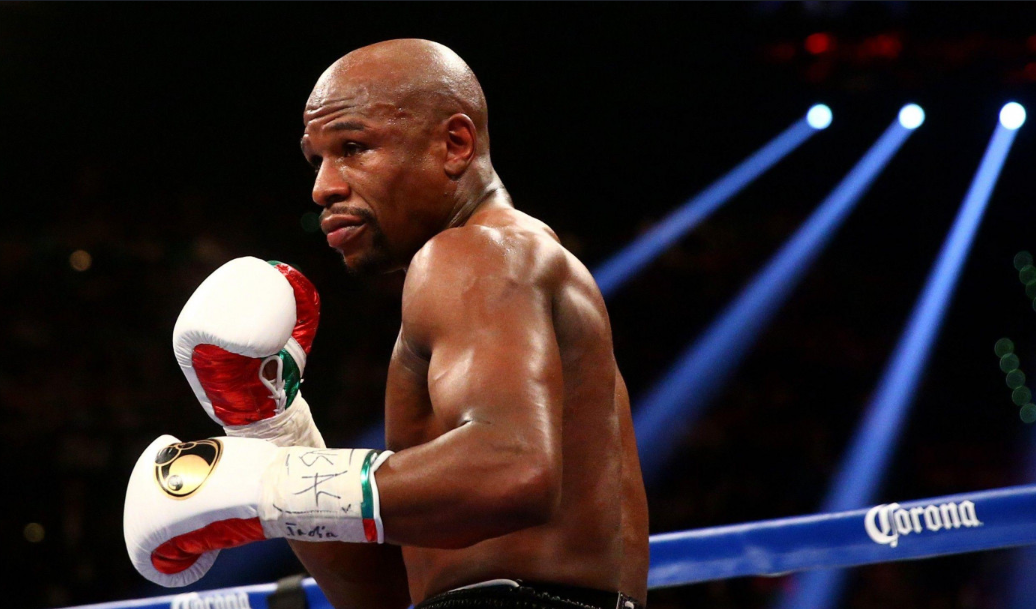
The Philly Shell: Floyd's signature defensive stance
The Philly Shell (His Signature Guard)
Floyd primarily operates from the Philly Shell — a bladed stance with his lead shoulder high, rear hand by his face, and lead hand low across his body. But he didn't just use it. He mastered it.
"I don't care who done it first. It's mine because I mastered it. The Philly shell? That's the Mayweather Defense."
— Floyd Mayweather Jr.What makes Floyd different is his constant guard switching. He never gives opponents the same look twice:
🛡️ Floyd's Four Guards
- Philly Shell — Signature stance. Lead shoulder high, rear hand protecting face, lead hand low
- Long Guard — Extended lead hand to measure distance and control range
- Low Guard — Hands down to bait punches and set up counters
- High Guard — Traditional defense when forced to fight inside
He constantly switches between these guards to provoke reactions and keep opponents guessing. Every guard has a specific purpose.
The Shoulder Roll
The shoulder roll is what makes the Philly Shell legendary, and Floyd perfected it under his father's training.
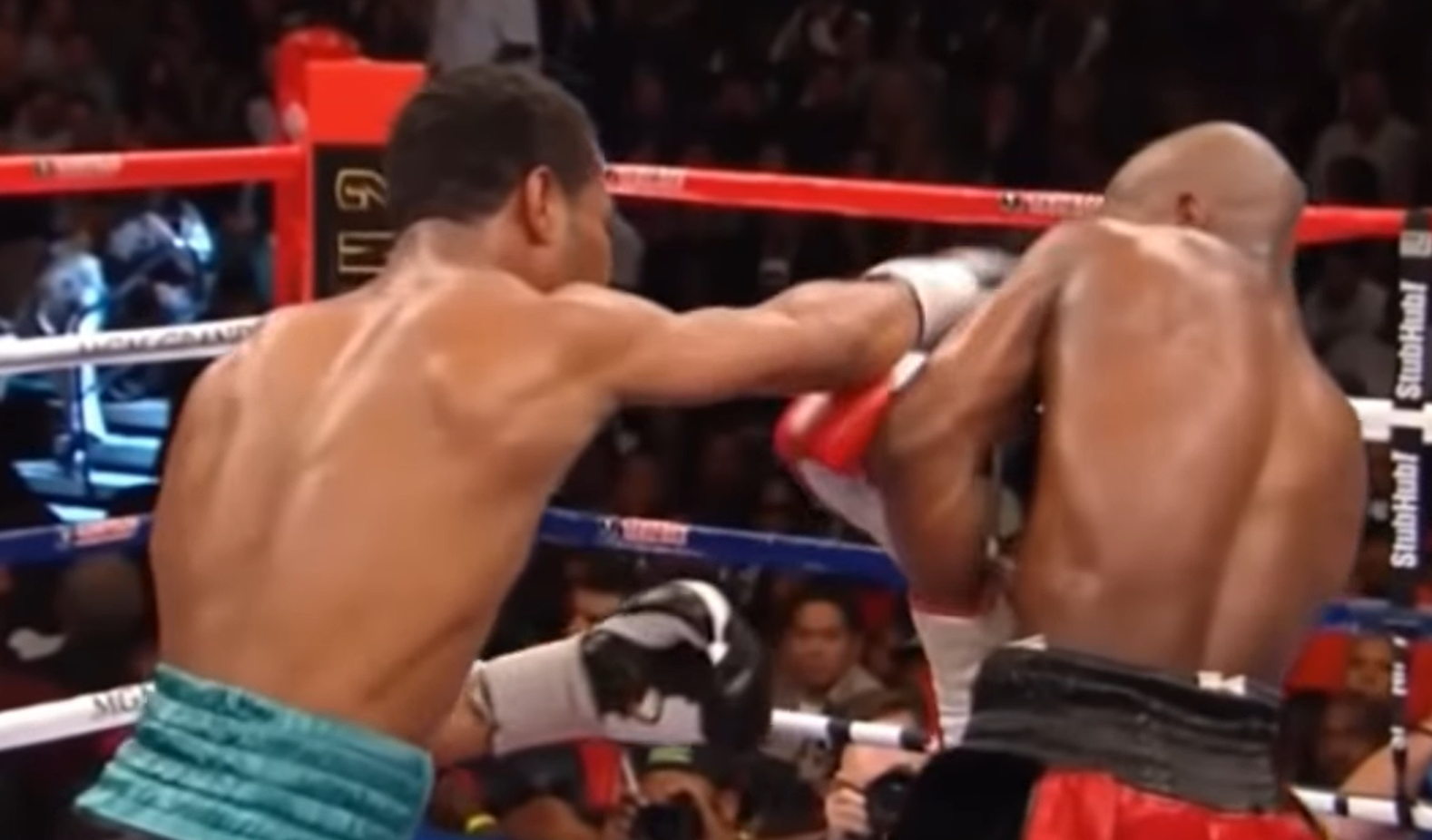
The shoulder roll: deflecting punches with minimal movement
Here's what most people get wrong: it's not about big movements. It's about timing and positioning. The shoulder only moves as much as necessary to deflect the punch. The chin stays perfectly tucked behind the front shoulder at all times.
The genius of the shoulder roll is what comes next: Floyd transitions instantly from defense to offense, countering before his opponent can reset.
Long-Range Weapons
Floyd's offensive strategy is to keep the fight on the outside as much as possible. He developed an entire arsenal of long-range punches designed to score while staying safe.
"The key to the fight game is to take less punishment. Keep them on the outside as much as possible."
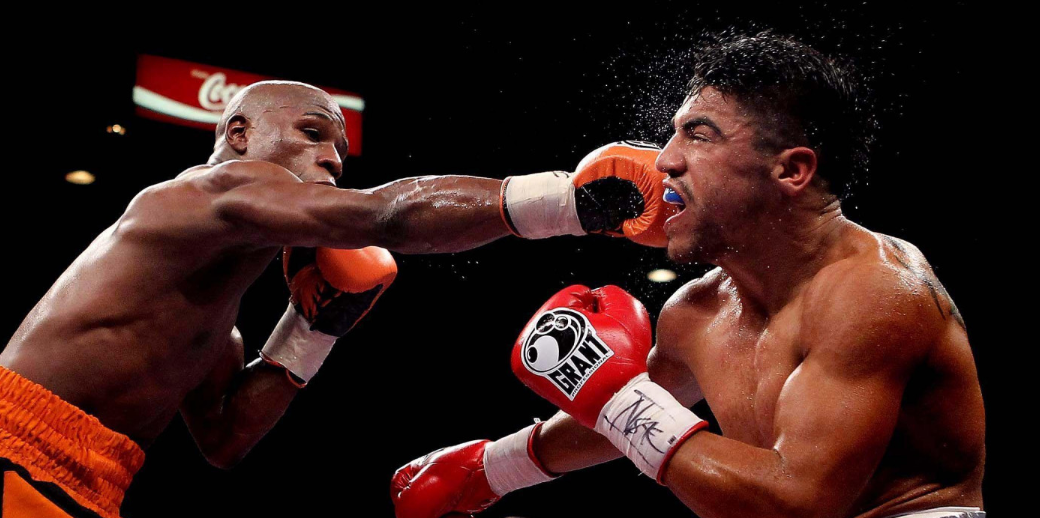
Floyd's pistol-like jab: fast, sharp, thrown from multiple angles
The Pistol Jab
Floyd's jab is fast, sharp, and thrown from various angles. Sometimes from his long guard. Sometimes from a low guard as an up-jab that catches opponents off guard. His jab to the body is devastating — it stops opponents from marching forward without Floyd having to get close.
The Long-Range Rear Hook
This is a signature Floyd shot that most boxers can't land. Typically, the rear hook only works at close range. But Floyd perfected throwing it from the outside by placing his weight on his front foot and whipping the hook with full body rotation.
The Lead Straight Right
Leading with your rear hand usually isn't recommended — you leave yourself open. But Floyd sets it up by lowering his stance, shifting weight forward, and launching the straight right with impeccable timing. He uses it to close distance when he wants to engage.
The Gazelle Punch
A leaping lead hook. Floyd feints low, then leaps forward, catching opponents with a hook from the side. It's an explosive gap-closer that opponents rarely see coming.
Offensive Ring IQ: Chess, Not Checkers
Floyd's offense isn't about power — it's about traps. He sets patterns, waits for opponents to adjust, then changes everything.
"I never said I was a Checkers player. I'm a chess player. Every move is calculated."
— Floyd Mayweather Jr.The Pattern-Break System
Against Oscar De La Hoya, Floyd used the jab to occupy up top, then came down with a stabbing jab to the body. Once Oscar adjusted, Floyd went low with the jab — and came up with his long-range rear hook. Constant adaptation.
Against Cotto, he landed the jab-rear hook combination over and over. Once Cotto adjusted to the rear hook, Floyd feinted the rear hook and came with a lead uppercut instead.
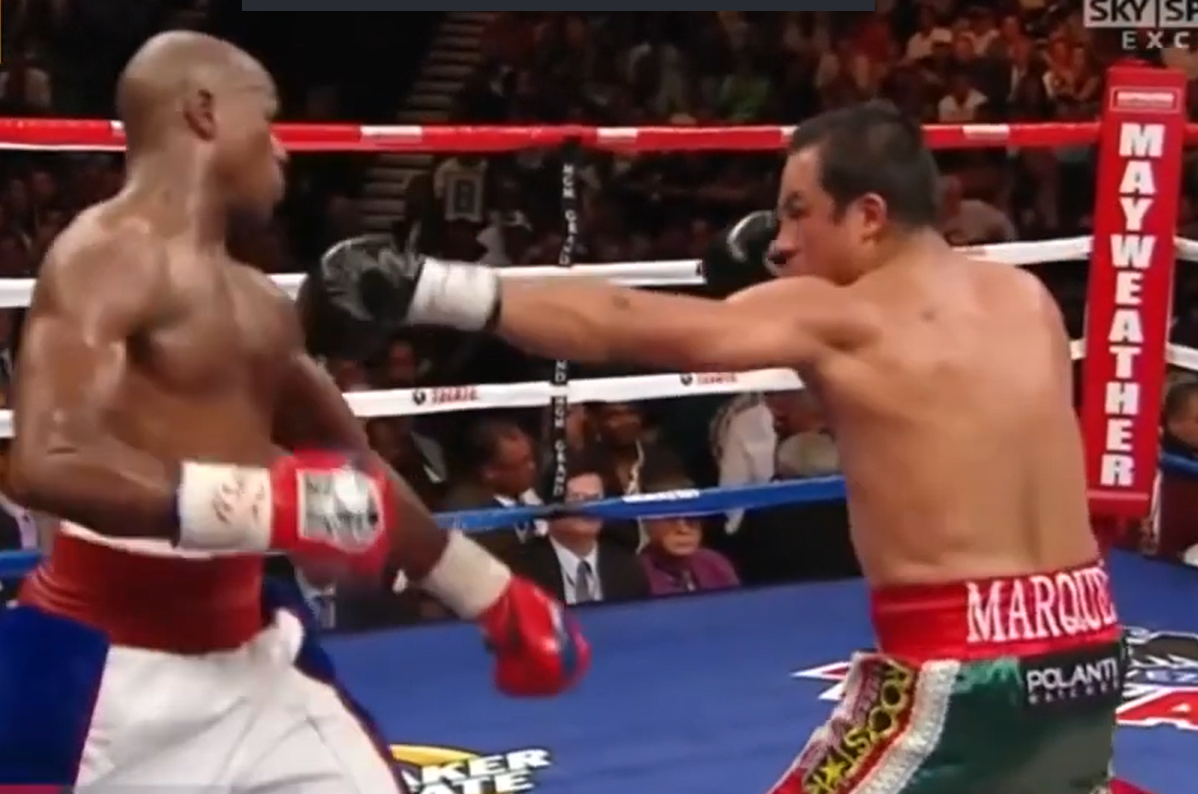
The pull counter: bait, pull back, fire the straight right
The Pull Counter
Floyd's most devastating weapon. He baits opponents into punching, pulls his head back slightly so they fall short, and fires back with a straight right before they can recover. He used it against Maidana, Marquez, and countless others.
But here's the genius: once opponents caught onto the pull counter, he would bait them expecting the pull — then leap forward with a lead hook instead.
🧠 Floyd's Adaptation Principle
- Step 1: Do the same thing over and over until they catch on
- Step 2: Once they catch on, do something different
- Step 3: When they adjust to that, go back to the first thing
- Step 4: Mix them up constantly
"Once you catch on to it, I move. I do something different. Then I go back to what I was doing the first time."
The Mental Edge: The Stare
One thing every Floyd opponent mentions: he's always looking. Always seeing. Always calculating.
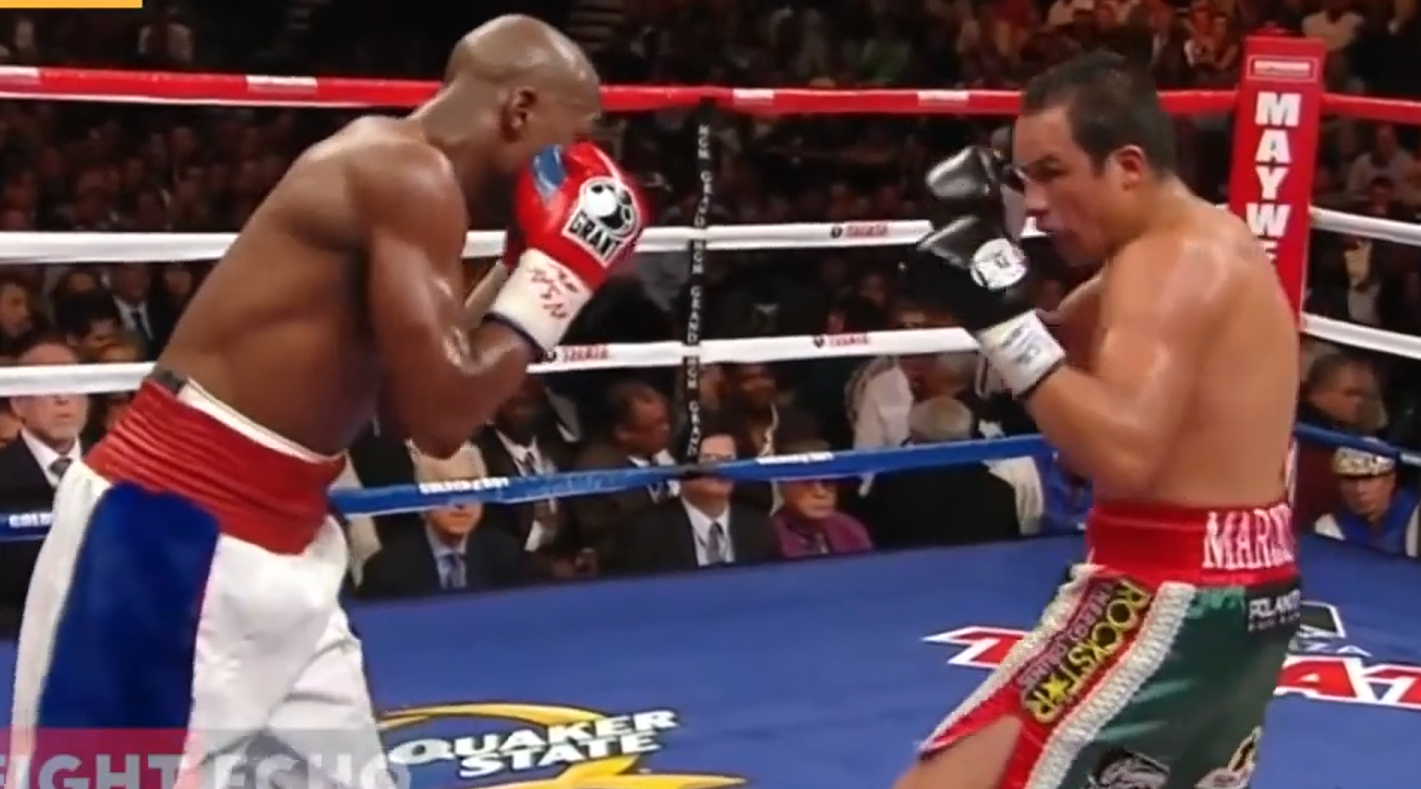
Unbreakable focus: always reading, always calculating
While opponents throw punches, Floyd watches. He puts them in a psychological box where they know: "If I keep swinging too much, I'm gonna hang myself out there to get hit."
His patience is his weapon. He makes opponents uncomfortable by refusing to engage on their terms. And when they make a mistake?
"If you make any mistakes, you have to pay."
Mayweather-Style Combinations
These are the combinations Floyd used to frustrate and outpoint opponents:
Train the Mayweather Style
Floyd's style is perfect for shadowboxing training. It's about precision, timing, and movement — not raw power. Here's a 6-round workout to drill his fundamentals:
6-Round Mayweather Shadowboxing Session
- Round 1: Philly Shell Movement — Stay in the Philly Shell. Practice slipping, shoulder rolling, and resetting. No punches — pure defense.
- Round 2: Jab Variations — Throw jabs from different guards. High jab, low jab, body jab, up-jab. Focus on speed and snap.
- Round 3: Long-Range Offense — Double jabs, straight rights, long rear hooks. Stay on the outside, don't crowd yourself.
- Round 4: Pull Counters — Visualize incoming punches. Pull back, fire the straight right or hook. Practice the timing.
- Round 5: Pattern Breaks — Throw a combination 3 times, then change the ending. Build the habit of adaptation.
- Round 6: Full Integration — Put it all together. Defense, counters, combinations. Be Floyd for 3 minutes.
The Unsolved Puzzle
50 and 0. No one figured it out. Some came close. Some decisions were controversial. But no one beat Floyd Mayweather.
His style isn't about being the strongest or the most aggressive. It's about being smarter. Reading opponents. Setting traps. Making them pay for every mistake.
Train the Mayweather way: defense first, patience second, precision third. Let them come to you — and make them miss.