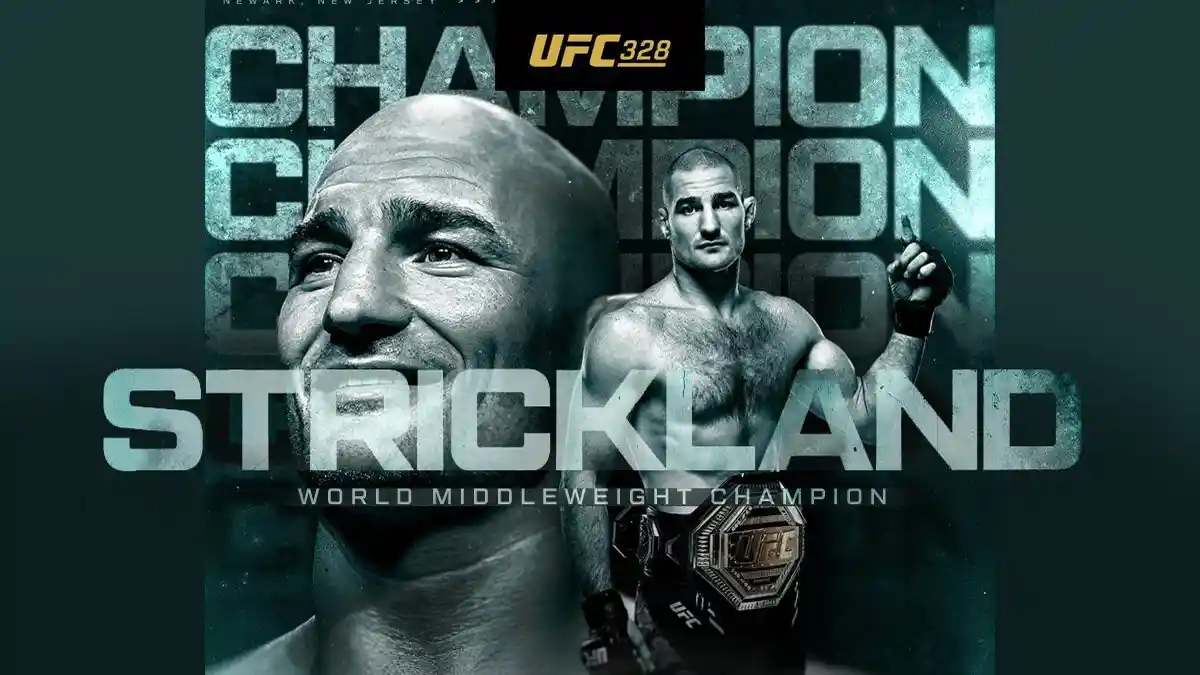
When people talk about Sean Strickland, they talk about the mouth. The comments. The persona. But strip all that away and you’re left with one of the most technically fascinating fighters in the UFC — a man whose stance shouldn’t work but does, whose pressure should be solvable but isn’t, and whose career arc from mid-card gatekeeper to champion and back represents one of the best case studies in modern MMA strategy.
This is the deep dive into his stance mechanics, how he beat Adesanya, what the Chimaev fight revealed, and where the style breaks down.
The Stance That Shouldn’t Work
Strickland’s stance violates almost every rule in traditional striking. His feet are close together — sometimes nearly parallel. His lead hand floats at stomach level. His rear hand sits by his jaw but loosely, not clamped. His posture is upright to the point of looking like he’s waiting in a queue.
Traditional coaches would tell you this stance is:
- Too narrow (no power base)
- Too upright (presents a bigger target)
- Too open (lead hand isn’t protecting anything)
But in the context of MMA, every one of these “flaws” becomes a feature.
Why Upright Works in MMA
The narrow, upright base means Strickland can check leg kicks instantly — he doesn’t have to shift weight. Against Adesanya, who typically chops lead legs to set up combinations, this was devastating. Izzy couldn’t get the leg kick game going because Strickland checked or moved his leg before the kick landed.
The upright posture also means quick sprawls. Against Chimaev — one of the most explosive wrestlers in the sport — Strickland’s ability to drop his hips and sprawl came directly from the upright starting position.
The Philly Shell for MMA
The low lead hand isn’t lazy — it’s a modified Philly shell. The lead shoulder stays high, creating a shield for the chin. When punches come, Strickland rolls his shoulder to deflect rather than blocking with his hands. This keeps his hands free for immediate counters.
The key difference from Mayweather’s Philly shell: Mayweather uses it to stay away. Strickland uses it to walk forward.
The Adesanya Fight: A Masterpiece of Style Imposition
UFC 293. Perth, Australia. Adesanya was a -700 favorite. The striking savant against the guy who “just jabs and walks forward.”
Strickland won 49-46 on all three cards. Here’s how:
Rounds 1-2: Establishing the Jab
Strickland threw over 100 jabs in the first two rounds alone. Each one served a purpose: measuring distance, occupying Adesanya’s vision, and — critically — preventing Izzy from setting his feet to throw the combinations he needed.
Rounds 3-4: Denying the Counter Game
Adesanya is one of the best counter-strikers in MMA history. He needs opponents to overcommit so he can time them. Strickland never overcommitted. Every advance was controlled, every combination was short (2-3 punches maximum), and he immediately reset after throwing.
Round 5: Sealing the Fight
By the championship rounds, Adesanya was visibly frustrated. Strickland’s pace hadn’t slowed. The jab volume was the same. The pressure was the same. Izzy tried to force exchanges and found himself eating jabs, right hands, and front kicks for his trouble.
The Chimaev Fight: The Stress Test
If Adesanya proved Strickland’s style works against elite strikers, Chimaev proved it survives against elite wrestlers — barely.
The split decision was razor-thin. Two judges gave it to Strickland; one had Chimaev. The fight revealed both the strengths and the vulnerabilities of the upright style.
What worked:
- Jab volume kept Chimaev at distance in the boxing rounds
- Upright stance allowed quick sprawls on single-leg attempts
- Strickland’s pace never dropped — Chimaev’s arguably did in rounds 4-5
What nearly failed:
- When Chimaev got the fight to the cage, the narrow stance made it harder to create frames
- Chimaev’s body locks from the clinch bypassed the Philly shell entirely
- Control time on the ground went heavily to Chimaev in rounds 2 and 3
Where the Style Breaks Down
Strickland’s approach has clear vulnerabilities that elite opponents can exploit:
1. Wrestling from the clinch. The upright stance is great for sprawling against open-space takedowns but weak against cage wrestling. Fighters who can close distance and body-lock from the clinch bypass the jab entirely.
2. Power shots on the exit. When Strickland resets after a combination, there’s a split-second where the guard opens. Fighters with timing — like a prime Whittaker — could exploit that window.
3. Leg kicks from southpaw. The narrow stance means the lead leg is more exposed to inside low kicks from southpaw. A dedicated calf-kick strategy could compromise mobility.
The Comparison to Mayweather
Read the full Strickland vs Mayweather comparison to see how both fighters use the same defensive system to completely opposite ends.
DRILL THIS TECHNIQUE
Punch Camp calls out the combos — you follow along on the bag. Train the exact techniques from this breakdown.
Start Training Free →